PEEK and titanium are two common materials for suture anchors. This article outlines their material differences, imaging behaviour and the limits of the biomechanical literature.
Titanium
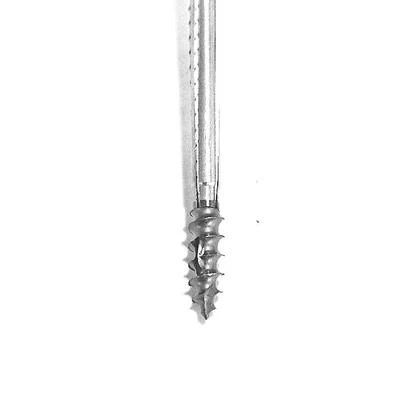
ASTM F136 is the reference standard for the Ti-6Al-4V ELI alloy used in implant applications.[2] As a metal, it may cause artefacts on MRI and CT images.
PEEK
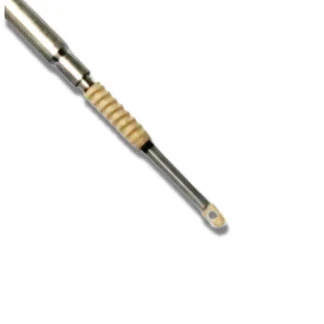
PEEK is a non-absorbable, radiolucent polymer. Containing no metal, it causes no metallic artefact; for the same reason the implant itself is not visible on plain radiographs. Its elastic modulus is closer to bone than that of metals.
Like any implant, PEEK has reported adverse events: the literature mentions osteolysis and cyst formation, and one case report describes a sterile tissue reaction.[3] A single case report does not establish frequency or causation.
What do the biomechanical data say?
In a network meta-analysis of rotator cuff anchors, PEEK anchors showed higher failure loads than biocomposite anchors. Metal anchors ranked first for least displacement, and stiffness did not differ significantly. PEEK anchors were more likely to pull out than biocomposite anchors.[1]
The study grouped anchors by material: size and shape differences within groups were not controlled, and the “metal” group was not separated specifically for titanium. Confidence in the evidence was generally very low.[1] These data therefore cannot answer “which material is better?”.
Comparison summary
| Topic | Titanium | PEEK |
|---|---|---|
| Material class | Metal alloy | Non-absorbable polymer |
| Imaging | Visible; may cause MRI/CT artefact | Radiolucent; no metallic artefact |
| Direct clinical comparison | Not found in this review | |
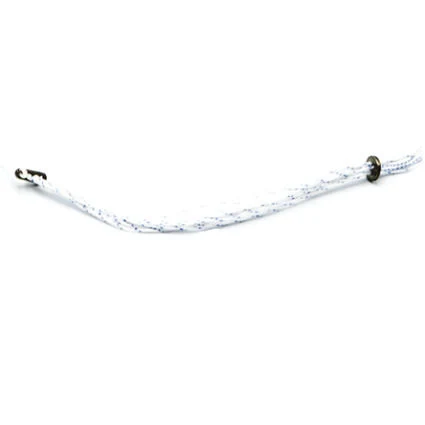
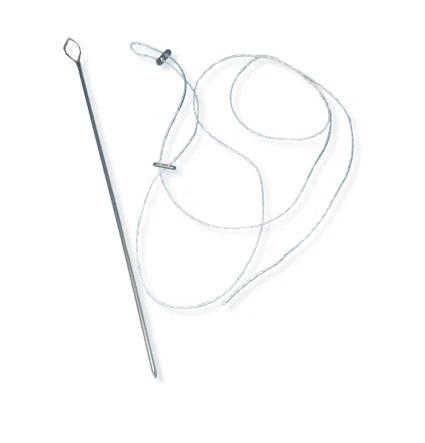
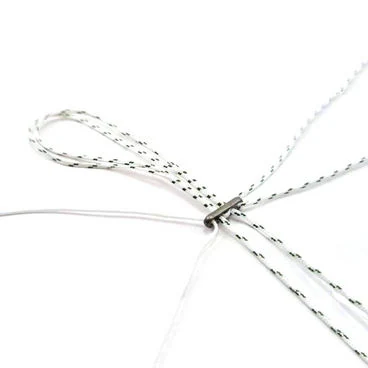
Some anchors combine both materials in one design, for example the Titanium Peek Knotless Pushlock. Material content is stated on the product page and label.
Who makes the choice?
Anchor selection depends on bone structure, joint, imaging needs and surgical technique, and rests with the healthcare professional. For the basics, see What Is a Suture Anchor?
Technical information request
Contact our team for product labelling, instructions for use and technical documentation requests.
References
- Yang Y-S, Shih C-A, Fang C-J, et al. Biomechanical comparison of different suture anchors used in rotator cuff repair surgery: all-suture anchors are equivalent to other suture anchors. A systematic review and network meta-analysis. J Exp Orthop. 2023;10:45. doi:10.1186/s40634-023-00608-w
- ASTM F136. Standard Specification for Wrought Titanium-6Aluminum-4Vanadium ELI (Extra Low Interstitial) Alloy for Surgical Implant Applications. ASTM International. store.astm.org
- Khuntia SK, Patro BP, Sahu S, Patel BK. Non-suppurative tissue reaction to polyether ether ketone anchor in rotator cuff repair. J Orthop Case Rep. 2022;12(8):47-52. doi:10.13107/jocr.2022.v12.i08.2960